
Picture three grown kids at their mom's kitchen table a week after the funeral. There's a jewelry box open between them. Two diamond rings that look almost the same. A gold watch nobody remembers seeing her wear. A string of pearls with no clasp.
One of those rings was Grandma's engagement ring. One came from a mall kiosk in 1994. Nobody knows which is which, and the one person who did isn't there to ask.
Down the hall, there's a gun safe. It's been locked since the day she died, because nobody has the combination.
I've talked with a lot of families since starting Planned With Purpose, and this is the part that surprises people. The house gets handled. The bank accounts get handled. It's the smaller things, the ones with the most meaning, that get lost, undersold, or fought over.
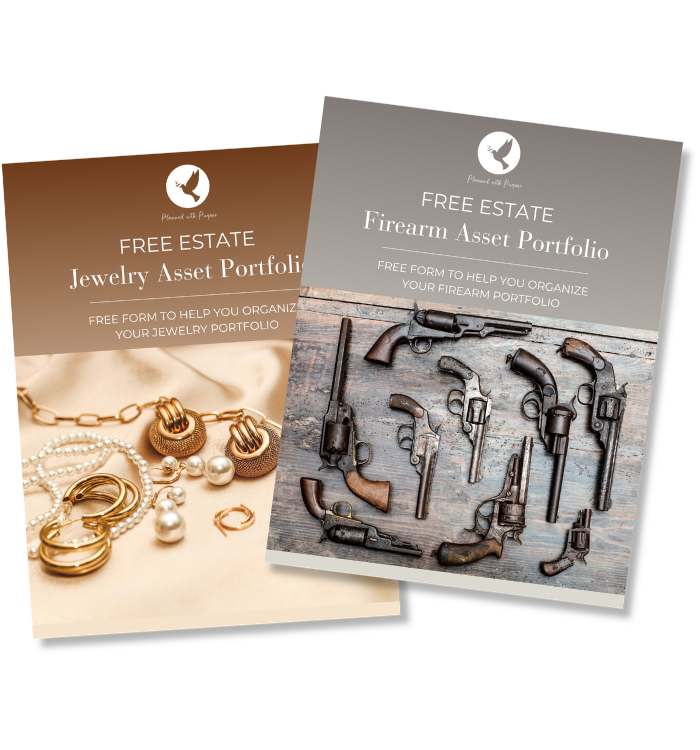
That's why I made two free forms: a Jewelry Asset Portfolio and a Firearm Asset Portfolio. They give you one place to write down what you have, what it's worth, where it's kept, and who you'd like to have it. Get both free forms here.
Quick answer: what is an asset form? An asset form is a written record of what you own, what it's worth, where it's stored, and who you'd like to have it. It isn't a will. It's the organized list your executor and family use to actually find, value, and pass on your things.
Why the Small Things are the Ones That Get Lost
Big assets come with paperwork. A house has a deed. A retirement account has a beneficiary form. A bank sends statements every month.
Jewelry and firearms usually don't. They sit in a drawer, a safe, or a closet shelf, and most of what makes them valuable lives in one person's head:
Which piece was appraised, and for how much
Which one has the story ("Dad bought this with his first paycheck")
Where the paperwork, keys, or combination are
Who was supposed to get it
When that person is gone, the family is left guessing. And guessing leads to three things I see over and over.
Arguments. Two siblings both remember being promised the same watch. Neither is lying. Nothing was written down.
Things sold for a fraction of their worth. Without a recorded value or appraisal, a $4,000 ring can go to a pawn shop for $200 because it "looked like costume jewelry."
Legal headaches. Firearms come with federal and state rules. An executor who doesn't know what's in the safe can't follow those rules, and learning them in the middle of grieving is hard.
What is an Asset Form, and Why Use One for Jewelry and Firearms?
You've probably seen general estate planning forms that ask you to list "personal property." That's a start. But a single line that says "jewelry: misc." doesn't help anyone.
An asset form template built for one category asks the right questions for that category. Jewelry needs appraisal dates and the story behind a piece. Firearms need serial numbers and a note about what paperwork goes with each one. A good form walks you through it so you don't have to know what to include. You just fill in the blanks.
Both of my forms are editable PDFs. You can type into them on your computer, save them, and update them whenever you buy, sell, or give something away.
What goes in a jewelry asset form
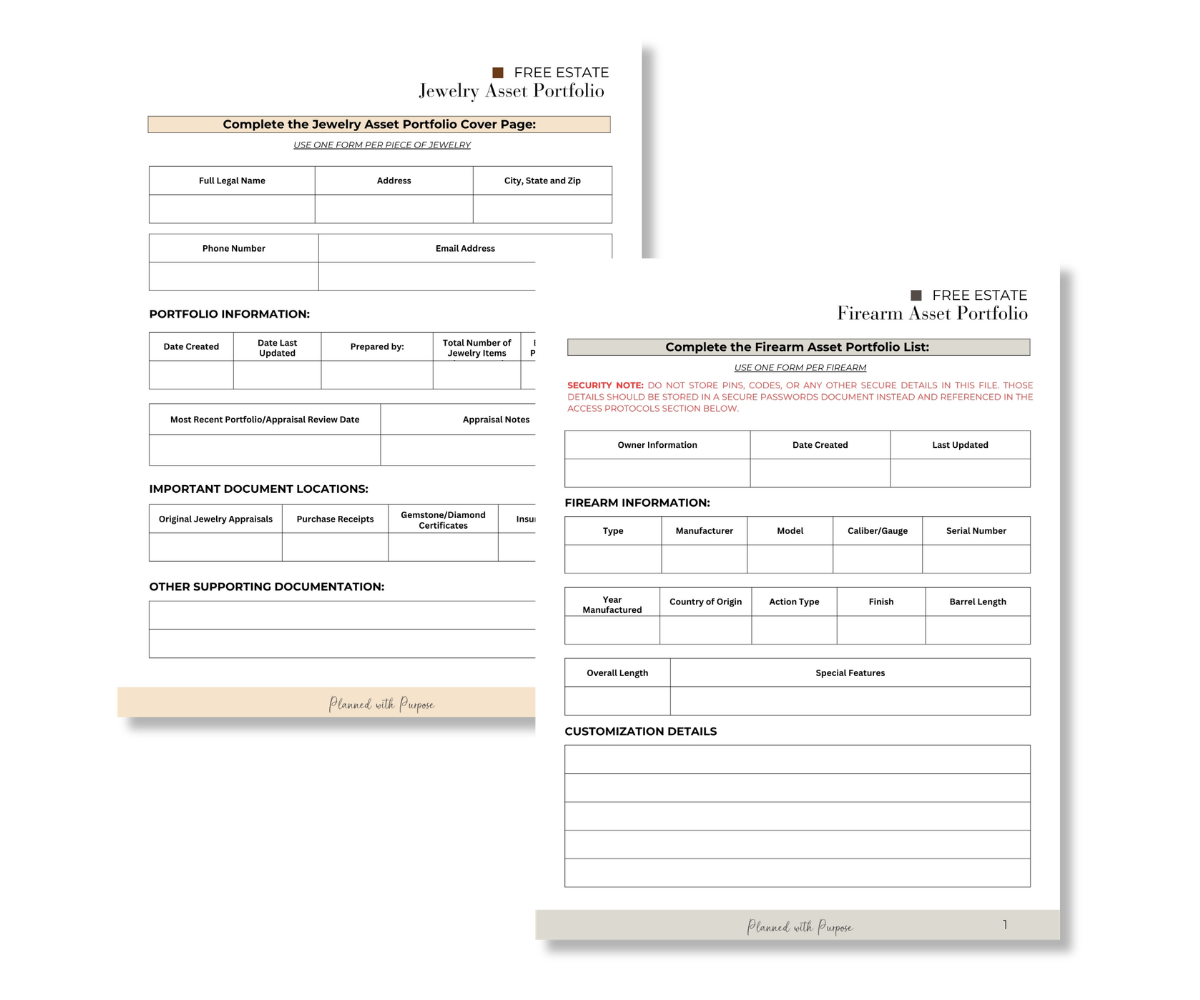
The Jewelry Asset Portfolio covers rings, watches, heirlooms, and the everyday pieces that mean something. For each piece, you'll record:
What it is and where it's kept
Appraised value, appraisal date, and insurance details
Where it came from, and any paperwork that goes with it (receipts, certificates, grading reports)
The story behind it
Who you'd like to have it
Tip: take a clear photo of each piece next to a plain background and note the photo's file name on the form. When two rings look alike, a photo settles it in seconds.
One thing families often skip: the story. Write it down, even if it's two sentences. Your granddaughter may not care what the ring appraised for. She'll care that her great-grandmother wore it every day through 52 years of marriage.
What Happens to Guns When Someone Dies?
This is one of the most common questions people ask, and the answer has more steps than most families expect.
In general, firearms become part of the estate. The executor is responsible for keeping them secure and passing them on legally. A few things worth knowing (and talking through with an estate attorney in your state):
Regular firearms like most rifles, shotguns, and handguns can usually pass to an heir under the will. But if the heir lives in a different state, the transfer generally has to go through a licensed dealer in the heir's state.
NFA items like suppressors and short-barreled rifles are registered with the ATF. The executor has to file paperwork (ATF Form 5) and wait for approval before an heir can take possession. According to ATF guidance on firearms in estates, these transfers to a lawful heir are tax-exempt, but the item stays in the executor's custody until the paperwork clears.
Items held in a gun trust follow the trust's terms, not the will. Your executor needs to know the trust exists.
No one can pass a firearm to someone who's legally prohibited from having one, even a family member named in a will.
State laws vary a lot. Some items legal in your state may not be legal where your heir lives.
You don't need to memorize any of that. Your executor just needs the facts in front of them so they can get the right help. That's what the form is for.
The Firearm Asset Portfolio is for collectors, hunters, veterans, and anyone with even one firearm at home. It walks you through:
Make, model, caliber, and serial number
Where each one is stored, and where the keys or codes are kept
Purchase details and estimated value
Whether anything is federally registered or held in a trust
Who you'd like to have it, and notes for your executor
Important: don't write safe combinations, PINs, or passwords on the form itself. Note where that information is kept (a sealed envelope with your attorney, a password manager your executor can access) instead.
How to Fill Out Your Asset Form Template in One Evening
This doesn't have to be a weekend project. Here's how I'd do it.
Download the forms. Pick one or both on this page. They land in your inbox in about a minute.
Start with the five pieces that matter most. Not the whole collection. The engagement ring, Dad's rifle, the watch. Get those done tonight.
Grab what you already have. Receipts, appraisals, insurance riders, purchase records. Note where each one is filed.
Write the stories while you're at it. This is the part nobody else can fill in for you.
Save it somewhere secure. A fireproof safe, inside an end-of-life organized binder and inside a locked file drawer, or your attorney's office. The forms list serial numbers and values, so don't email them around unprotected.
Tell one trusted person where it is. A form nobody can find doesn't help anyone.
Set a reminder to update it once a year. Your birthday or New Year's works well.
Add more pieces over time. A partly filled form is still a huge gift compared to an empty jewelry box and a guessing game.
Two free forms that give you one place to write down your jewelry and firearms: what you have, what it's worth, where it's kept, and who you'd like to have it.
Download Now
An Asset Form Isn't a Will—Here's How They Work Together
I want to be clear about this, because it matters.
Writing "I'd like Sarah to have my sapphire ring" on an asset form tells your family what you wanted. It doesn't make it legally binding. If you want to be sure a specific piece goes to a specific person, it needs to be in your will or trust.
Some states let you attach a separate written list of personal property to your will (often called a tangible personal property memorandum), which you can update without redoing the whole will. Not every state allows this, and the rules for firearms are stricter. An estate attorney in your state can tell you what works where you live.
Think of it this way: your will says who gets what. Your asset forms say what it is, where it is, and why it matters. Your executor needs both.
Frequently asked questions
What is an asset form?
An asset form is a written record of what you own, what it's worth, where it's kept, and who you'd like to have it. It gives your executor and family one place to find the details they'll need.
Is an asset form legally binding?
No. It's an organizing tool, not a will. To make sure a specific item goes to a specific person, include it in your will or trust, or ask an estate attorney whether your state allows a separate written list of personal property.
What should a jewelry inventory include?
A description of each piece, where it's kept, appraised value and appraisal date, insurance details, where it came from, any certificates or receipts, a photo, the story behind it, and who you'd like to have it.
What happens to someone's guns when they pass away?
Firearms generally become part of the estate. The executor keeps them secure and passes them on according to federal and state law. Items like suppressors and short-barreled rifles need ATF approval before an heir can take them. Talk with an estate attorney in your state.
Where should I keep my completed asset forms?
Somewhere secure that your executor can reach, like a fireproof safe, a locked file, or your attorney's office. Don't email them unprotected, and don't write safe combinations on them.
Can I fill out the forms on my computer?
Yes. Both are editable PDFs you can type into, save, and update anytime.
Are the forms really free?
Yes. Both the Jewelry Asset Portfolio and the Firearm Asset Portfolio are free. Download them here.
Give Them Answers Instead of Questions
The people you love are going to have a hard enough week. They shouldn't also have to guess which ring was Grandma's, or stand in front of a locked safe wondering what's inside and who it was meant for.
A little time with these forms tonight can save your family weeks of guessing later. And honestly? Most people say they feel lighter once it's done.
Disclaimer: The information, services, and products provided on this blog post, including the custom funeral planning binder, digital download products, blog posts, tips, resources, and other related materials, are offered for informational and organizational purposes only. While we strive for accuracy and aim to help customers plan and organize their end-of-life arrangements, we do not provide legal, financial, or medical advice. The content and products on this site, including all informational resources, are not a substitute for professional services from attorneys, financial advisors, or healthcare providers. We do not guarantee the completeness, legality, or applicability of our products or information in all jurisdictions, and we are not liable for any damages or consequences arising from their use. Users are encouraged to consult with appropriate professionals for specific legal or financial advice regarding their individual situations. By using this website, you acknowledge and agree to our Privacy Policy and Terms and Conditions, and you accept that the use of our products, services, and informational resources is at your own risk.